04 May 2026
LongBlack Korea: In Conversation with Billy Walker
We’re pleased to share this feature originally published by prominent Korean publication LongBlack, who sat down with our Master Distiller Billy Walker to trace the origins of his craft, his philosophy and the journey that led him to The GlenAllachie.
From resurrecting distilleries to creating whiskies that have twice claimed the World’s Best Single Malt title, Billy’s story is one of passion, patience and an unwavering belief in doing things the right way.
We hope you enjoy this insight into the man behind The GlenAllachie.
[Original article content begins below]
THE JOYFUL OBSESSION OF A 54-YEAR MASTER: “WHISKY IS NOT WORK TO ME”
It has been about four years since I first delved into the world of single malt whisky. At some point, I found myself repeatedly reaching for one particular brand – The GlenAllachie.
In the whisky industry, they are nothing short of a phenomenon. Having released their first bottling only in 2018, they are technically a newcomer. Yet,
they managed to captivate whisky enthusiasts almost overnight. In 2021, just three years after their launch, and again in 2025, they were crowned
‘World’s Best Single Malt’ at the World Whiskies Awards (WWA). To date, GlenAllachie stands as the only Scottish distillery to have clinched this prestigious title twice—a feat that speaks volumes of their liquid gold.
The acclaim isn’t limited to critics; the market response has been even more electric. During the pop-up events at The Hyundai Seoul in 2022 and 2024, fans pitched tents and camped out overnight to secure limited editions. It was the birth of Korea’s first ‘Open-Run’ whisky craze.
This fervent fandom, perhaps appearing a bit intense to some, is actually directed toward the master behind the brand: Billy Walker. A veteran with 54 years of craft under his belt. A chemist by training. The ‘Midas Touch’ who resurrected four obscure distilleries from the brink of obscurity.
This interview, however, is not merely a technical breakdown from a whisky expert. It is a story of a life. We wanted to uncover how Billy Walker first encountered whisky as a boy, the exact moment he fell in love with the craft, and what has kept him anchored to this single pursuit for over half a century. We sought to listen to the scenes etched into his hands, his nose, and his memory.
LongBlack met with Billy Walker, the Master Distiller of GlenAllachie, via video call to trace the origins of his mastery.
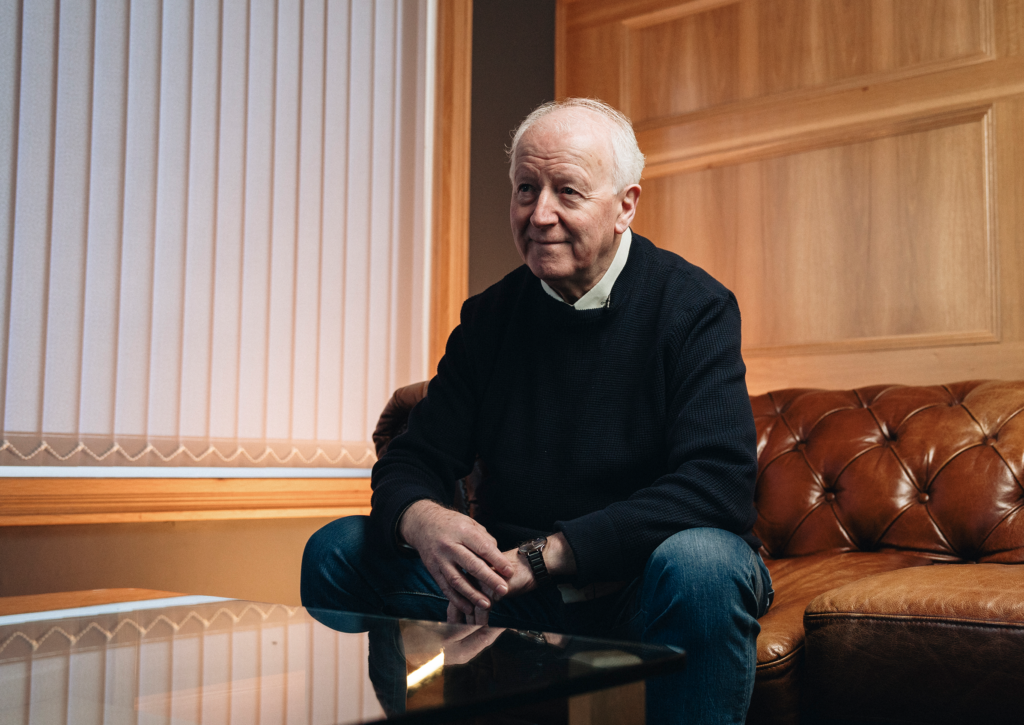
Billy Walker: The Master Distiller of THE GlenAllachie
Right now, a glass of GlenAllachie 10-Year-Old Cask Strength (CS) sits on my desk. Two hours have passed since I poured it, yet I haven’t taken a single sip. The reason is simple: the glass hasn’t stopped “breathing.”
The architect behind this liquid sensory experience is Billy Walker. In the world of Scotch whisky, he is often referred to as a ‘Living Legend.’ Billy Walker has always been a free spirit. Though born and bred in the very heartland of whisky, he never felt bound by the weight of tradition. He didn’t just follow the
footsteps of those before him; he chose to carve his own path through the peat and oak.
The motto of GlenAllachie can be distilled into a single sentence: “We pursue perfection, not consistency.” Throughout his interview with LongBlack, this was the word he returned to time and again, like a recurring note in a complex dram: Perfection.
Chapter 1. The Man Who Breathed Life into Fading Distilleries
Speyside is the beating heart of Scotch whisky. It is the ancestral home of icons like The Macallan, Glenfiddich, Glenlivet, and Balvenie. The Spey River, which winds through the region, is famous for its fast-moving, crystal-clear currents. Water that cascades down the granite peaks of the Cairngorms is said to be exceptionally pure and soft.
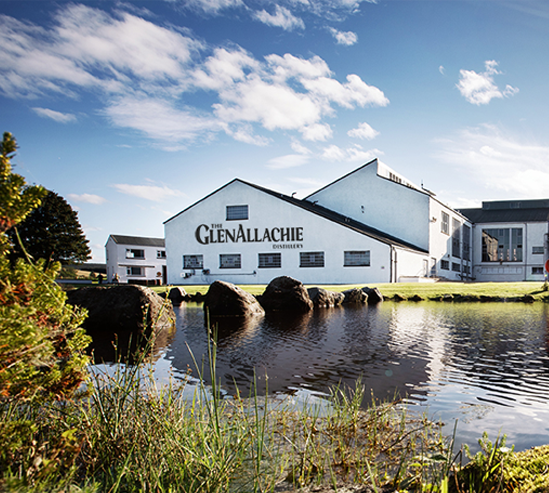
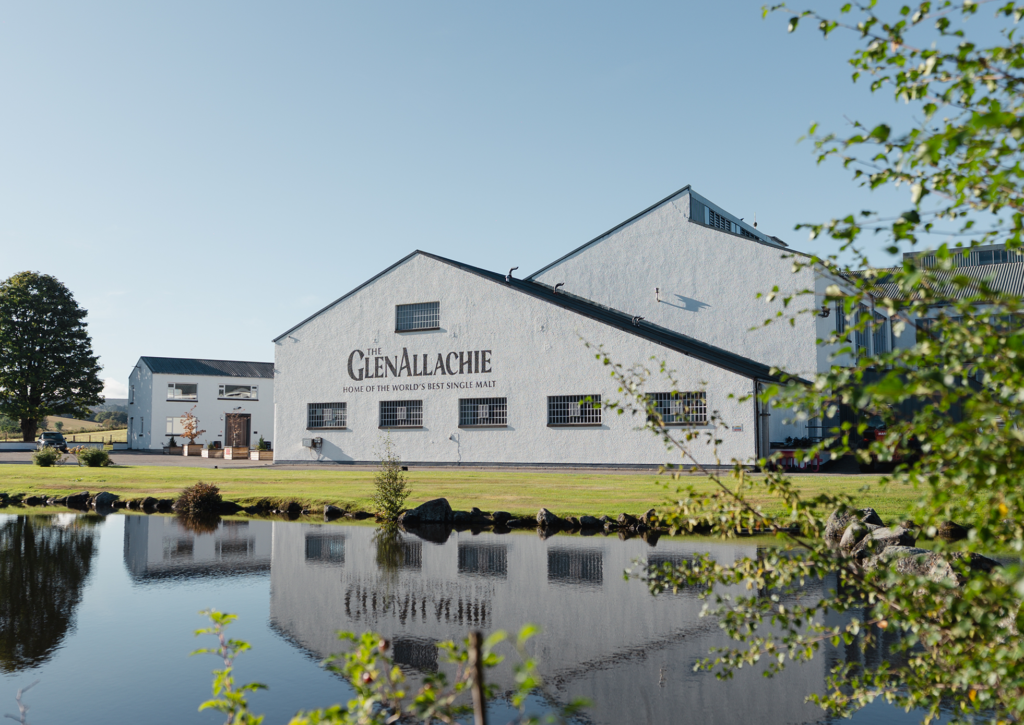
In the center of Speyside, nestled at the foot of Ben Rinnes, lies the GlenAllachie distillery. First established in 1967, it remained largely anonymous for half a century. Its quiet purpose was to produce “filler” malt—bulk spirit destined for blended whiskies, never intended to bear its own name on a label.
Yet, in just eight years, this once-obscure distillery has become synonymous with the “World’s Best Single Malt.” This transformation was sparked in 2017, the year Billy Walker took the helm. What’s truly remarkable is that GlenAllachie wasn’t his first miracle. In 2004, Walker acquired BenRiach, a mothballed distillery. In 2008, he took over GlenDronach, which had been shuttered for six years. By 2013, he added the forgotten coastal gem, Glenglassaugh, to his portfolio. Under his stewardship, all three were resurrected to critical acclaim before being sold to Brown-Forman* in 2016 for £285 million (approx. 540 billion KRW).
Most expected the legend to settle into a well-earned retirement. Instead, the following year, at the age of 72, he purchased GlenAllachie.
Q. Everyone was stunned when you acquired another distillery in 2017.
“If I’m being honest, I didn’t want to sell those three distilleries in 2016. Circumstances with my co-founders led to the sale. For me, there is an immense joy in taking an unknown distillery and crafting something people truly love. If it were up to me, I would have avoided the sale, but it wasn’t possible at the time.”
Q. So, do you find more joy in building a brand from an unknown distillery?
“Exactly. I have a penchant for acquiring distilleries that have never been properly introduced to the market. It means we inherit a stock of existing spirit, but more importantly, it gives me a ‘free hand’—the total creative autonomy to reinvent its identity.”
Q. Was that the vision behind GlenAllachie?
“Yes. GlenAllachie was already producing a high-quality spirit. I wanted to give that spirit a distinct personality. My vision was to create a Sherry-forward whisky—one that captures the complex layers of flavor derived from various casks. I believed that by doing so, I could craft a whisky that reaches as close to perfection as possible.”
Chapter 2. The Chemist Behind the Cask
A perfectionist’s ambition for a Sherry-forward whisky—Billy Walker’s vision for GlenAllachie was hardly a surprise to the industry. In the whisky world, he is revered as the ‘King of Sherry.’ His mastery lies in utilising Sherry casks to layer whisky with a profound, opulent depth that few can replicate.
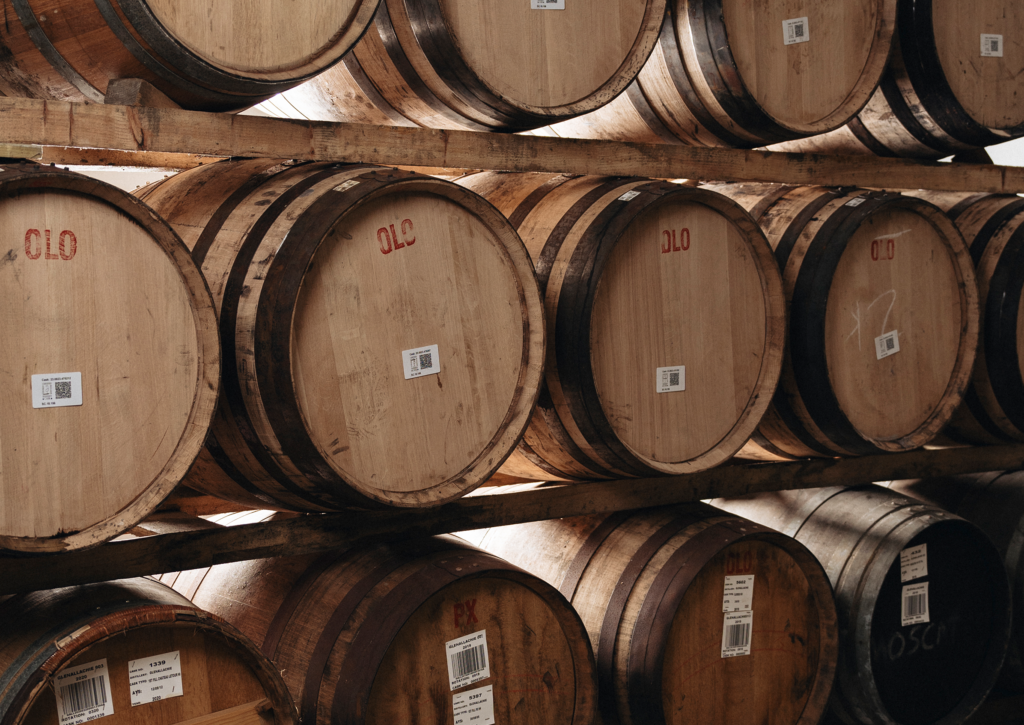
Even those unacquainted with the complexities of spirits understand the gravity of the cask. Walker often remarks that the wood accounts for 70% of a whisky’s final flavor profile. As the compounds within the oak leach into the liquid over time, the whisky’s soul begins to take shape.
Among all vessels, the Sherry cask is singular. Hailing from the Jerez region of Spain, these fortified wine barrels are imbued with a symphony of dark chocolate, dried figs, raisins, and roasted nuts. When whisky is matured in these casks, it inherits that entire sensory legacy.
But in an industry where everyone knows the value of a good cask, how did Billy Walker earn his crown?
Q. You were born in Dumbarton, the very heart of whisky country. When was your first encounter with the spirit?
“To be honest, it was when I was fifteen. I sneaked a dram from my father’s liquor cabinet. (Laughs)”
Q. Was that the fated moment you decided to become an expert?
“Not at all. As a boy, I dreamt of being a professional footballer. Sadly, that dream didn’t materialize. I went on to study Chemistry at the University of Glasgow and spent some time working in the pharmaceutical industry. My path wasn’t a straight line to the distillery. It was only later that I joined a company famous for Ballantine’s.”
Q. What did your time at Ballantine’s teach you?
“Joining Ballantine’s was a stroke of luck—they were a titan of the industry. I had the privilege of observing every single stage of the whisky-making process. That’s where I felt a sense of destiny. I was fascinated by how my background in chemistry could explain the transformations happening within the spirit.”
Q. Do you use that chemical knowledge to blend the whisky?
“It’s actually the opposite. Blending must rely entirely on instinct and experience. You have to let your senses lead the way. However, once the blend is created, science allows you to understand why it tastes and smells the way it does. By scientifically analyzing the interaction between the spirit and the oak, I can determine the direction of my next experiment.”
Q. Could you give us a specific example?
“Oak is a complex structure of cellulose, lignin, lipids, and tannins. When we craft a cask, the wood is naturally seasoned for at least 48 months. During this period, enzymes break down these compounds. Cellulose transforms into sugars, and lignin evolves into vanillin and aromatic compounds like eugenol. It is these scientific shifts that dress the whisky in its most seductive aromas.”
Chapter 3. Freedom: The Wellspring of Excellence
True mastery is rarely the child of pure science. While precision matters, the excellence of GlenAllachie lies elsewhere—in its audacity. It experiments with a boldness that suggests it has long since unlearned the rigid “grammar” of traditional whisky-making.
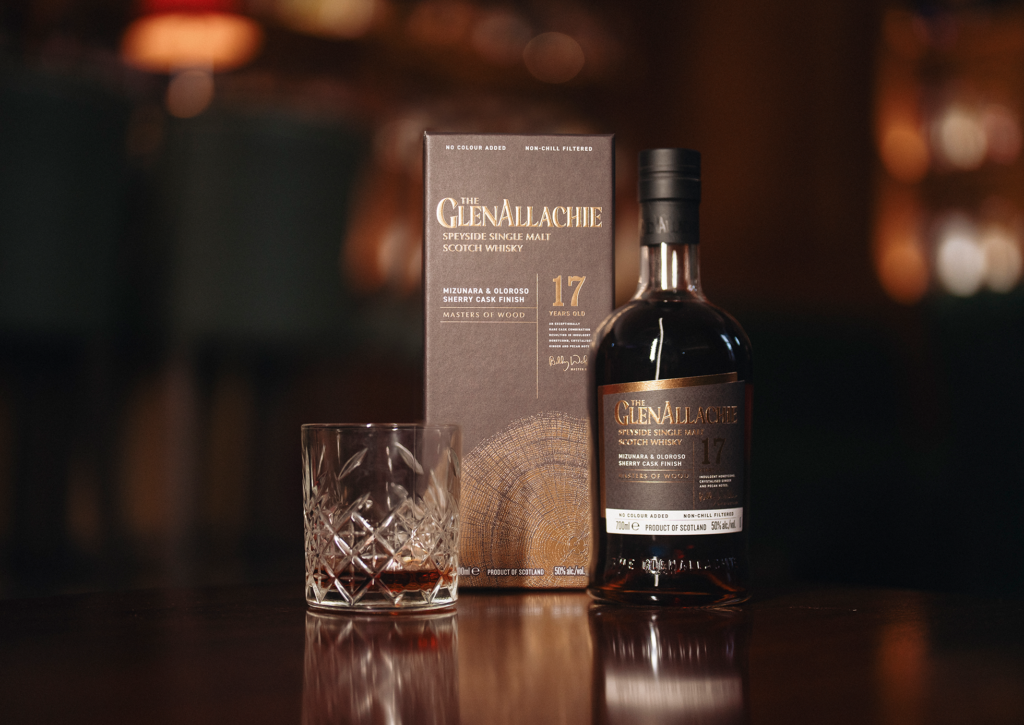
Consider the recent sensation: The GlenAllachie 17-Year-Old Mizunara & Oloroso. In March 2026, this expression clinched the Gold Medal in the Scottish category at the World Whiskies Awards (WWA). By marrying spirit matured in rare Japanese Mizunara oak with that of fragrant Oloroso Sherry* casks, Walker created a profile where deep agarwood meets luscious dark fruits—a fusion hailed as “the seamless melting of East and West.” Even Walker himself lauded it as “whisky reaching toward perfection.”
To an industry insider, this was an incredibly risky gambit. Mizunara casks are the most expensive in the world, often costing ten times more than a standard barrel. Aging wellmatured, high-value spirits in such unpredictable wood is rare; conventional wisdom dictates a safer route for premium stock. Yet, Billy Walker thrives on this edge. For him, “Freedom is the catalyst for creativity.”
Q. You are renowned for your relentless and creative experimentation.
“Creativity is the single most important element in whisky-making. But to unleash that creativity and imagination, one needs immense freedom. I learned this during my time at Inver House Distillers—the company I joined after Ballantine’s.”
Q. Ballantine’s was a titan at the time. Why move to a smaller firm?
“Large, established corporations often don’t need creativity. Their global reputations are set; they aren’t pressured to reinvent the wheel. But I was driven by curiosity. I always wanted to build something new. Every distillery I worked for after that was a smaller ‘whisky house.’ They granted me total autonomy, allowing me to conduct every experiment I could dream of.”
Q. What did that freedom afford you in the long run?
“An incredibly diverse wealth of experience. To be a great blender, you must experience an exhaustive variety of casks. You must be able to visualize exactly how a specific wood will transform the spirit. If I want a spicy edge, I might look to Scottish Virgin Oak or French Limousin; if I’m seeking herbal notes, I might turn to Marsala or Mongolian oak. Understanding these nuances, aging the spirit, and then weaving them together… that is where my joy lies.”
Q. It sounds as though you’re suggesting it’s better to work in an environment that fosters growth rather than a stable, large corporation.
“Absolutely. Only when you engage in truly creative work can you deliver a superior experience to the consumer. That, ultimately, is the only path to becoming exceptional.”
Chapter 4. Pursuing Perfection Over Consistency
GlenAllachie’s audacity isn’t confined to aroma alone. Its philosophy permeates how the whisky is aged, bottled, and presented to the world—defying the industry’s longstanding blueprints at every turn.
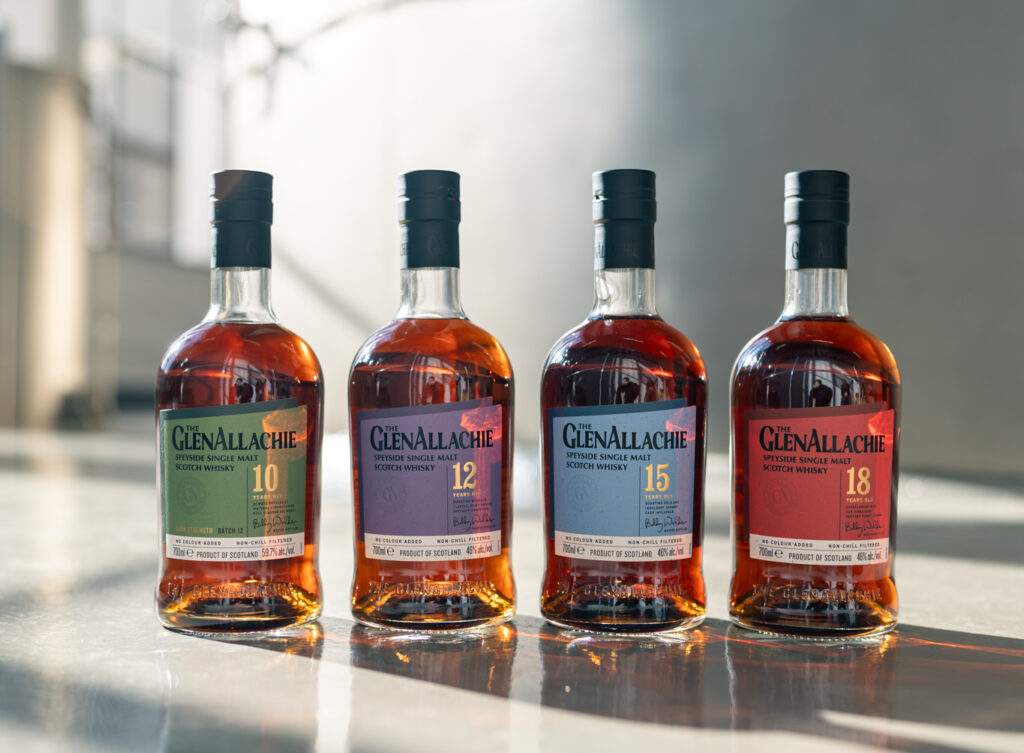
The most striking example is their commitment to Batch Production. Certain GlenAllachie’s core range carry tags like Batch 1, Batch 2, and Batch 3. In the whisky world, a “batch” refers to the specific group of casks bottled at one time.
While the concept of a batch exists across the industry, the objective is usually the same: to ensure every bottle tastes identical to the last. Distilleries meticulously blend casks to a fixed recipe, worshiping at the altar of Consistency.
GlenAllachie takes the opposite path. They intentionally select different combinations for each release. They gather the most exceptional casks maturing in the warehouse at that specific moment to create the “best possible dram of the hour.” Because each batch possesses a unique aromatic fingerprint, they must be numbered and celebrated as distinct entities.
There is another way GlenAllachie flouts convention: the refusal to use Caramel Coloring. Many are surprised to learn that numerous brands add coloring to their whisky. It’s not necessarily to make the liquid “prettier,” but to ensure that every bottle on every shelf looks exactly the same.
Q. I think many consumers assume that a deeper color, perhaps aided by additives, implies a deeper flavor.
“The color of whisky is a natural gift from the cask. At GlenAllachie, we are constantly evolving our maturation techniques in the pursuit of a better spirit. Naturally, the color will fluctuate from one bottling to the next. To us, this variation isn’t a flaw; it’s the truth of the process.”
Q. Yet, so many heritage brands strive for that uniform glow, even if it requires additives.
“I believe many brands are burdened by the weight of their own history. They feel a duty to preserve a flavor profile and a hue that has been loved for decades. However, when you become obsessed with Consistency, you inevitably become a prisoner of the past. For us, the pursuit of Perfection is far more vital than the maintenance of consistency.”
Q. Is this why you insist on selling by batch?
“Exactly. Because every batch has its own distinct nose and palate, we are allowed to keep experimenting. With every new batch, we aren’t trying to replicate the last—we are trying to surpass it.”
Q. I always thought of whisky aromas as simply being ‘different’ from one another.
When you speak of ‘Perfection,’ does it mean there is an objective ‘better’? “I believe so. There is a state of harmony and intensity that one can describe as
‘approaching perfection.’ However, 100% perfection is a ghost—it doesn’t exist. If you ever find yourself thinking, ‘This is 100% perfect,’ then you’ve lost your way. There is always something deeper, something more captivating waiting to be discovered. That is why this journey has no end.”
Q. Of all the whiskies you’ve crafted, which one felt the closest to that elusive perfection?
That’s a difficult question. Every whisky has its own special moment. The Glenallachie 15-year-old always holds a central place in my heart. In Scotland, a whisky like this is referred to as a ‘true gem’ or a belter as I’d call it.
Chapter 5. On Waking with Purpose
“The history of GlenAllachie is divided into two eras: Before Walker and After Walker” – so wrote a prominent British whisky publication, a testament to the seismic shift Billy Walker brought to the distillery.
Upon acquiring GlenAllachie, Walker immediately executed a series of high-stakes decisions that defied conventional business logic.
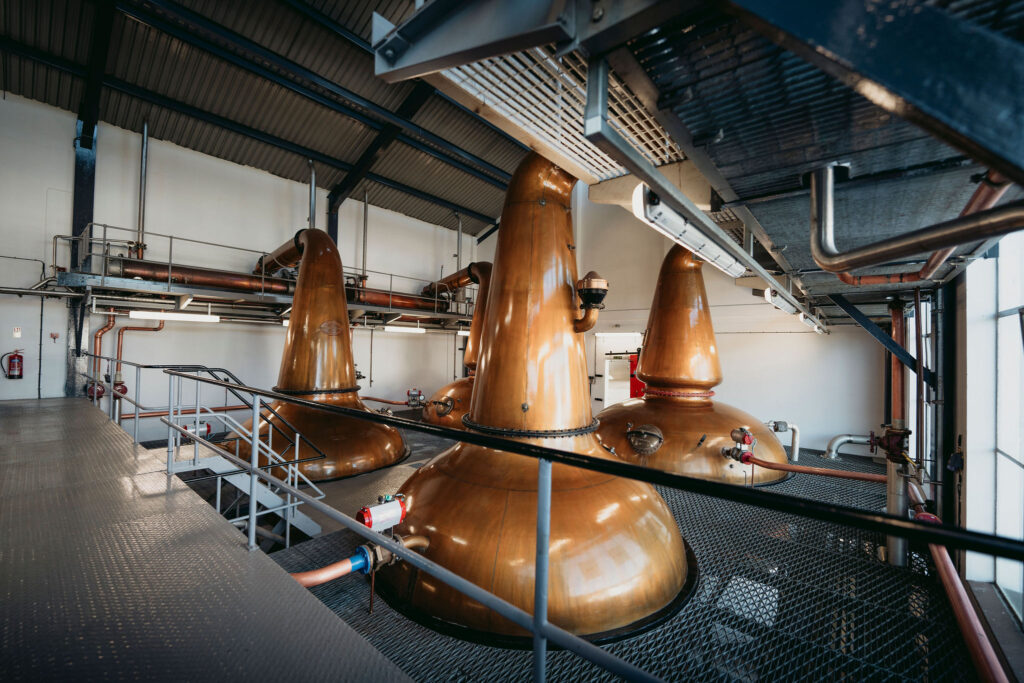
First, he slashed annual production from 4.2 million liters to just 1 million. The reason? He extended the fermentation time—the period where the spirit’s raw ingredients develop their character—by more than threefold. While this inevitably throttled the production line, it coaxed out the complex, ester-rich fruit notes that Walker envisioned as the soul of the new GlenAllachie.
Furthermore, he mandated that every bottle of GlenAllachie maintain an alcohol content of at least 46% ABV. In an industry where the standard sits at 40–43%, raising the proof means adding less water, which in turn means sacrificing over 10% of potential volume.
His motivation was purity. At the industry standard of 40–43%, certain fatty acids can clump together, causing the whisky to turn cloudy—a phenomenon known as “flocking.” Most brands prevent this through chill-filtering, freezing the whisky to strip away these fats before bottling. Walker refused. To him, those fatty acids are where the flavor lives.
Extending fermentation, cutting production, raising ABV, and eschewing chill-filtration —to an accountant, these are madness. They are decisions that deliberately erode potential revenue.
Q. From a purely business standpoint, these don’t seem like “optimal” decisions.
“Acquiring a distillery carries a profound weight of responsibility. You must respect its history and heritage. What you create shouldn’t be for your own ego, but for the distillery itself.
When I set out to acquire GlenAllachie, the people there put their trust in me. They believed I was the one to evolve the distillery and deliver a superior spirit. I am deeply grateful for that trust, and I can say with confidence that I have acted in accordance with it every day since.”
Q. So, even though you own the distillery, you feel you don’t have the right to run it however you please?
“Precisely. This is a concept that is truly, truly important to me. I may buy a distillery, but I can never truly ‘possess’ it forever. People are merely passing through. In the grand timeline of a distillery’s history, I am nothing more than a custodian. My responsibility is to manage it well, uphold its integrity, and ensure its honor remains untarnished for the next generation.”
Q. Have you ever considered retirement?
“No. I wake up every single morning with a sense of purpose. The moment I open my eyes, I want to be in the lab. Every week, I analyze and nose at least 400 whisky samples. I am constantly thinking about what comes next, what experiment to try. I find immense joy in this.”
Q. It sounds as though this is no longer just a ‘job’ for you.
“You’re right. It’s an obsession. But it is a deeply joyful and rewarding obsession.”
When listing the distinct characteristics of oak from various regions and the chemical compounds they yield, the master’s eyes sparkled with the wonder of a young boy. After describing how different casks impart notes of nutmeg and cinnamon, coconut and vanilla, he added with a smile: “I could talk about this for hours and never grow weary.”
Here is a man who has immersed himself in a single pursuit for 54 years, yet remains unexhausted, his love for the craft undimmed. Listening to him, one couldn’t help but feel a natural yearning to live a life of such enduring passion.
Finally, knowing his special affection for Korea, I asked if he had a message for his many fans there.
“My connection with Korea stretches back a very, very long time. It is a beautiful country with beautiful people, and it has played a vital role in my career in Scotch whisky. To honor that bond, I am currently preparing another Korea-exclusive release, following last year’s success. You can certainly look forward to it.”